Peace & Justice

This is the blog of the Commission on Peace and Justice for the Roman Catholic Diocese of Albany, New York.

Friday, June 20, 2014

Catholic mother condemned

The case of Meriam Ibrahim has gained world-wide attention.
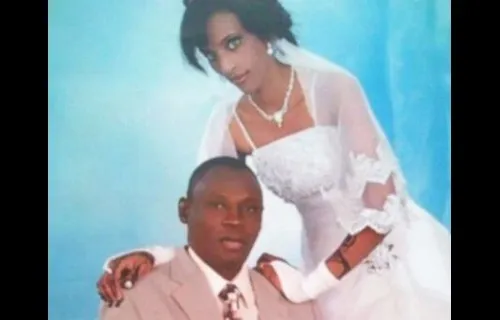
She is the 27-year-old Catholic woman in Sudan who was sentenced to death and to 100 lashes after refusing to renounce her Christian faith. She has been convicted by a court in Khartoum on charges of apostasy and adultery. Last month, she gave birth to a baby girl while shackled to the floor in a Khartoum prison where she is being held with her newborn daughter and 20-month-old son.

Her husband, Daniel Wani, a US citizen, told the Guardian newspaper that his wife and children were being held in inhumane conditions, and the prison authorities were "extremely tough" with her. He said that she spent two days in her labor blood after she gave birth and was prevented from having a shower until the human rights committee visited. 
According to newspaper reports, Ibrahim had told the court she was the daughter of a Sudanese Muslim father and an Ethiopian Christian mother. She said that her father left when she was six, and she was brought up as a Christian by her mother. She met Wani, who moved to the US in 1998 and became an American citizen, in 2005. They were married at Khartoum Catholic church on December 19, 2011.

CNA/EWTN News reports that the Catholic Archdiocese of Khartoum has urged Sudanese authorities to review the legal case. 
“The fact of the matter is that Meriam did not abandon the Islamic faith but rather she, in the first place, did not follow the Islamic religion since her childhood,” Father Mussa Timothy Kacho, episcopal vicar for the archdiocese’s Khartoum region, said June 11.

He said the archdiocese has “deep regret” over the way the case was handled “in disregard to Meriam’s moral and religious belief.” He noted that Sudan’s interim constitution guarantees religious freedom.

Vatican Radio reports that a gathering of Christians, Muslims, Jews, Hindus, Sikhs and representatives of other denominations from across the European Union earlier this month called for her immediate release.
A petition has been started urging the Obama administration to “pressure the Sudanese government to release Meriam and her children so she can escape execution and possible death of her children and be rejoined with her husband in the U.S. Please grant her expedited safe haven in the U.S., where she could seek asylum.”

You can sign the petition here.

Labels: ,

Friday, February 24, 2012

Building Peace in South Sudan

Janice McLaughlin, M.M., president of Maryknoll Sisters, celebrated her anniversary by helping the world's newest nation prepare for the future, and then writing about it in the latest issue of Maryknoll magazine.
I was filled with excitement and curiosity last summer as the plane approached the airport in Juba, capital of the Republic of South Sudan. Just two weeks earlier—on July 9, 2011—this newest nation in Africa had achieved independence after 38 years of civil war. Landing in Juba, I discovered a kind of Wild West town with unpaved streets, one-story buildings and people on the move—on foot, motorbikes and horse-drawn carts—as huge trucks were bringing in supplies from Kenya and Uganda. The scars of war were everywhere—from bombed out buildings to fragments of wrecked planes. The scars were less visible in the people. Still celebrating their hard-won freedom, they exuded a spirit of hope and enthusiasm despite their extreme poverty.
The entire article is here.

Labels:

Sunday, June 19, 2011

U.S. Effort Urged to Defuse Sudan 'Time Bomb'

America magazine reports on the Situation in Sudan:
The bishop of Tombura-Yambio, Southern Sudan, urged the United States to use whatever diplomatic means it can to pressure the government of President Omar al-Bashir to end its attacks on civilians in South Kordofan state. Bishop Eduardo Hiiboro Kussala said the danger of war is great if troops from the North continue their attacks in an attempt to control key areas along the unresolved border between Sudan and Southern Sudan, due to become independent July 9.

"There are many terrible scenarios that are pointing to war," Bishop Kussala said June 16 prior to testifying about the situation in Southern Sudan to the House Foreign Affairs Subcommittee on Africa, Global Health and Human Rights. "We are scared. . . ."
. . .
Sudan and Southern Sudan must resolve several key issues in order to carry out all of the provisions of the 2005 Comprehensive Peace Agreement and prevent full-scale war, the bishop explained.

He pointed to several unresolved concerns:
-- Defining the border between the two countries.
-- Citizenship for residents in the disputed regions.

-- The split of revenues from oil reserves, which are largely located in Southern Sudan.
The issues "are like a time bomb. If we don't fulfill these things, we are likely to go back into more conflict. South Sudan, even getting independence, could be immediately thrown into war," Bishop Kussala said.

The Catholic Church in the region has called for al-Bashir to open key roadways to allow humanitarian aid to reach the tens of thousands of internally displaced people who have fled the violence. The United Nations estimates that 60,000 people have fled Kadugli alone.

"The humanitarian situation is deplorable," Bishop Kussala said. "A lot of people have been displaced. A lot are running for their lives in the villages in the forest. So we have a huge, huge need for humanitarian assistance.

"The church's role, of course, in this is to bring into light the situation of these people and ask for support from whoever can come to the aid of these people. More than this is also fear of the continuation of violence in the Nuba Mountains and in Southern Kordofan. If it continues it's going to become uncontrolled and it could throw the whole country into violence," he said. "So I've come to appeal to the Congress, and say 'Look, there's no time to waste. It's the moment to seize and be able to stop what's going on because the more it continues, it could easily draw the other warring parties in Sudan into violence.'"
The rest of the article is here.

Labels:

Saturday, October 16, 2010

Sudan Diary

The second installment of Bishop Hubbard’s diary of his trip to Sudan is here. In the following excerpt, he describes some of the work done by Catholic Relief Services (CRS).

In Southern Sudan, CRS staff focuses on agriculture, education, health, peacemaking and emergency relief. During the civil war between 1983 and 2005, CRS staff endured all the dangers and humiliations that were experienced by the local populous. Because of this solidarity, CRS remains one of the most well-known and respected humanitarian organizations in Southern Sudan.

Given the high security risk in many parts of the South, international staff serving CRS in Southern Sudan cannot be accompanied by any family members. This is another huge sacrifice they make.

CRS Southern Sudan operates in an extremely complex environment. Large portions of the country are flood prone, meaning that above-normal rains can lead to displacement as well as crop failure. At the same time, a year without sufficient rain can be equally devastating, leaving drought-affected households unable to produce sufficient food supplies.

Insecurity, including intra- and inter-tribal conflicts, is a constant presence in Southern Sudan and forces tens of thousands of households into a state of internal displacement every year.

CRS Southern Sudan’s Emergency Preparedness and Response program provides support to these populations, including food, temporary shelter materials and essential household and hygiene items.

Labels: ,

Tuesday, October 12, 2010

Sudan video

Catholic Relief Services and the Catholic Church are convinced that today, southern Sudan presents a rare opportunity to relieve staggering human suffering before it happens. View a powerful 5-minute video here.

Labels:

Saturday, October 09, 2010

Sudan Diary -- Part 1

As chair of the International Committee for Justice and Peace of the United States Conference of Catholic Bishops, Bishop Howard Hubbard recently traveled to Sudan and Nigeria. The first installment of his four-part diary of the trip appeared in this week’s edition of The Evangelist, our diocesan newspaper. It is available here.

Some excerpts:

In this most recent civil war (1983-2005), two million people from Sudan were killed and more than four million displaced, mostly moving from the South to the North.

In 2005, the United Nations, the African Union, the United States, Norway and Great Britain helped broker a Comprehensive Peace Agreement (CPA). This resulted in a cessation of armed conflict, an interim constitution with a power-sharing arrangement known as the Government of National Unity (GNU) in Khartoum, composed of the now defunct Northern Government of Sudan (GOS) and the semi-autonomous government of Southern Sudan (GoSS).

The ruling regime in the North, the National Congress Party (NCP) is a mixture of military elite and the Islamists Party that came to power in a 1989 coup. The South is governed by the Southern Peoples Liberation Movement (SPLM).

Part of the CPA’s stipulation is that on Jan. 9, 2011, there will be a referendum wherein the South will determine whether it will secede from the North or remain in unity with the North.

There will also be a determination about the affiliation of three transitional areas along the North-South border: the oil-rich Abyei, the Southern Kordofan/ Nuba Mountain State and the Southern Blue Nile.

Abyei will have a referendum in 2011 to determine its own affiliation, while the other two areas will remain with the North but will be granted more political influence through local consultations.

. . . . . . . . . .

On Wednesday morning, we met with Cardinal Gabriel Tubier Wako at his residence. He has served as the archbishop of Khartoum since 1981 and was elevated to the College of Cardinals in 2003.

Although ailing recently, the cardinal has been instrumental in seeking the rights of Christians and other minorities in Northern Sudan. He is deeply concerned about what will happen to Christians in his archdiocese and in the North of Sudan if there is a separation between the North and the South.

The cardinal fears that if there is not strong action on the part of the international community and the guarantors of the CPA, Christians and other minorities in the North may be subject to Sharia (Islamic Law) and became further marginalized than they already are.

Further, if Christians who were displaced to the North during the Civil War should now to be returned to the South, there is the fear of the loss of education, jobs and even persecution without strong assistance from the international community.

. . . . . . . . . .

The USAID staff recognizes the need to assist the government in the South to develop its capacity for providing basic services to its people. They are very interested in hearing from Church officials the attitudes and needs of the people at the grassroots level, since the churches are the most respected institutions in the South, having stayed with their flock during the atrocities of the civil war.

Labels: ,