Peace & Justice

This is the blog of the Commission on Peace and Justice for the Roman Catholic Diocese of Albany, New York.

Monday, November 07, 2022

Voter guides for Catholics

The Catholic Church does not offer voter guides. However, several Catholic organizations do. Here are two recent ones for those who have not yet cast a ballot.
 
US Catholic magazine offers a free, downable guide. It reminds us that abortion is not the only issue to consider. “Catholic voters are responsible for knowing the church’s values and what role faith plays in our political decisions. Morally responsible voting reflects appreciation of the common good, the various issues that support or hinder its realization, and the quality and character of the candidates who can help make this happen.”
 
As the US Conference of Catholic Bishops reminds us in their document Forming Consciences for Faithful Citizenship, “As Catholics we are not single issue voters. A candidate’s position on a single issue is not sufficient to guarantee a voter’s support.” 
 
Among seven other issues to consider, US Catholic lists climate change, racial justice, the culture of violence, immigrants and refugees, poverty, health care and international relations.
 
The document also includes seven reflections about Catholic political engagement that address how we should vote.
 
You can download the guide here.
 
The Jesuit Conference of Canada and the United States reflects on our Gospel call to promote the common good in the public square with this guide. They note that many people today will describe politics with terms like polarized, dysfunctional, ugly, vitriolic or even irredeemable, Pope Francis has called it one of the “highest forms of charity.” They explain, “Charity, or the Latin caritas, is the highest theological virtue and a word for what we more commonly call ‘love.’ So, Pope Francis is saying that politics is an important way of loving God by loving our neighbor in an incarnational, concrete way. Catholics are called to get involved in politics — to ‘meddle,’ even! — instead of disengaging and avoiding the messiness of political life.”
 
We read, “If we approached civic involvement open to finding God in the messiness of politics, how might our engagement be different from the darker spirit we often find on cable news and social media? Maybe we would find some of the same fruits that often come with praying the Examen daily: increased gratitude, deepened awareness of God in unexpected places, humility in acknowledgment of our own shortcomings paired with trust in God’s gentle mercy to help us grow. These are all gifts of the Holy Spirit that would benefit our political life immensely.”
 
These guides are helpful not just for this year’s elections, but also for how we can approach politics in the coming years.

Labels: , , , , , ,

Tuesday, May 24, 2022

Laudato Si’ Week

Hundreds of thousands of Catholics are uniting this week to mark the seventh anniversary of Laudato Si’, Pope Francis’ encyclical on the care of creation. 
 
In the Diocese of Albany, a planning group is being organized to prepare a Laudato Si’ Action Plan that will outline tangible actions that can be taken to meet the seven Laudato Si’ Goals in the coming years. Members of the committee are expected to be announced shortly.
 
The theme for the week is “Listening and Journeying Together.” The eight-day global event is guided by the following quote from Pope Francis’ Laudato Si’: “Bringing the human family together to protect our common home” (LS 13).
 
On May 27, the day celebrating ecological education, footage from "The Invitation,' a new feature-length documentary film on Laudato Si’, will be shown to the general public for the first time during a live-streaming event. "The Invitation" will have its global release later this year. Registration is required and is available here.
 
More information on the week’s activities and the complete schedule is here.

Labels: ,

Monday, January 03, 2022

World Day of Peace

In his message for the 55th World Day of Peace on January 1, Pope Francis discussed an “architecture” of peace, to which different institutions of society contribute, and an “art” of peace that directly involves each one of us. He offers us three paths for building a lasting peace: 

First, dialogue between generations as the basis for the realization of shared projects. Second, education as a factor of freedom, responsibility and development. Finally, labor as a means for the full realization of human dignity. These are three indispensable elements for “making possible the creation of a social covenant”, without which every project of peace turns out to be insubstantial.


“In every age,” writes the Pope, “peace is both a gift from on high and the fruit of a shared commitment.” Part of that shared commitment is dialogue, the first path discussed by Pope Francis:

Although technological and economic development has tended to create a divide between generations, our current crises show the urgent need for an intergenerational partnership. Young people need the wisdom and experience of the elderly, while those who are older need the support, affection, creativity and dynamism of the young.


Great social challenges and peace processes necessarily call for dialogue between the keepers of memory – the elderly – and those who move history forward – the young. Each must be willing to make room for others and not to insist on monopolizing the entire scene by pursuing their own immediate interests, as if there were no past and future. The global crisis we are experiencing makes it clear that encounter and dialogue between generations should be the driving force behind a healthy politics, that is not content to manage the present “with piecemeal solutions or quick fixes”, but views itself as an outstanding form of love for others, in the search for shared and sustainable projects for the future.

Education, the second path, is also important for peace. Pope Francis writes:

In recent years, there has been a significant reduction worldwide in funding for education and training; these have been seen more as expenditures than investments. Yet they are the primary means of promoting integral human development; they make individuals more free and responsible, and they are essential for the defense and promotion of peace. In a word, teaching and education are the foundations of a cohesive civil society capable of generating hope, prosperity and progress.


Military expenditures, on the other hand, have increased beyond the levels at the end of the Cold War and they seem certain to grow exorbitantly. 


It is high time, then, that governments develop economic policies aimed at inverting the proportion of public funds spent on education and on weaponry. The pursuit of a genuine process of international disarmament can only prove beneficial for the development of peoples and nations, freeing up financial resources better used for health care, schools, infrastructure, care of the land and so forth.

The third path discussed by the Pope is labor.

Labor is an indispensable factor in building and keeping peace. It is an expression of ourselves and our gifts, but also of our commitment, self-investment and cooperation with others, since we always work with or for someone. Seen in this clearly social perspective, the workplace enables us to learn to make our contribution towards a more habitable and beautiful world.


The Covid-19 pandemic has negatively affected the labor market, which was already facing multiple challenges. . . .


In a particular way, the impact of the crisis on the informal economy, which often involves migrant workers, has been devastating. Many of the latter are not even recognized by national legislation; it is as though they did not exist. They and their families live in highly precarious conditions, prey to various forms of slavery and with no system of welfare to protect them. Currently only one third of the world’s population of working age enjoys a system of social protection, or benefit from it only in limited ways. . . .


Labor, in fact, is the foundation on which to build justice and solidarity in every community. For this reason, our aim should not be “that technological progress increasingly replace human work, for this would be detrimental to humanity. Work is a necessity, part of the meaning of life on this earth, a path to growth, human development and personal fulfilment”. We need to combine our ideas and efforts in order to create the solutions and conditions that can provide everyone of working age with the opportunity, through their work, to contribute to the lives of their families and of society as a whole.

The entire message, which discusses these three paths in greater detail, is here.

Labels: ,

Saturday, November 13, 2021

Catholics urge UN leaders to follow Pope Francis

More than 60 Catholic organizations from around the world have issued a statement urging leaders at the United Nations 26th Climate Change Conference to follow Pope Francis' leadership in reaching a prophetic final agreement.
 
“The science is clear,” they wrote, adding that “an extractive, unsustainable economy, fueled by fossil fuels, is causing the climate crisis that's destroying God's creation and harming the most vulnerable among us the most, those who have done little to cause the crisis.”
 
Signatories include representatives of Franciscans International; the Bishops of England and Wales; the Catholic Climate Covenant; GreenFaith; Irish Episcopal Conference; Maryknoll Office for Global Concerns; Missionary Society of St. Columban; Sisters of Mercy of the Americas Justice Team; and the Sisters of Charity. 
 
“We owe it to our poorest sisters and brothers, future generations, and all of God's creation to seize this historic opportunity,” the statement noted. “In 2015, Pope Francis wrote in Laudato Si’ that fossil fuels need ‘to be progressively replaced without delay.’ Now, in 2021, we have reached a decisive moment. We must reach an agreement in Glasgow that sets a clear and ambitious timeline for a just transition away from harmful fossil fuels. Setting out such a pathway is an essential step to accelerating investment in a clean energy future for all.”
 
He entire statement, along with a list of signatories, is here.

Labels: , , , , , ,

Monday, September 06, 2021

Bishops' Labor Day statement

For Labor Day, Archbishop Paul S. Coakley of Oklahoma City, chairman of the U.S. Conference of Catholic Bishops’ Committee on Domestic Justice and Human Development, released a statement in which he writes, “It is our task not only to reflect on the present ills of our economy, but also to build consensus around human dignity and the common good, the bedrocks of Catholic social teaching, and to answer the Pope’s call to propose new and creative economic responses to human need, both locally and globally.”  


Archbishop Coakley notes:

Throughout the pandemic, the bishops have advocated in favor of nutrition programs, an eviction moratorium, income and employment support, safety measures for those who are incarcerated, and access to health care. During consideration of legislative proposals on infrastructure, the bishops shared with members of the U.S. Congress that Pope Francis considers employment to be the “biggest issue” in politics as it relates to reducing economic inequality. We emphasized the importance of creating jobs for those who are poor and marginalized, prioritizing organized labor and continued protection of workers’ rights. We also called for the legislation to support working families and address the ecological crisis that impacts all workers. 

The entire statement is available here.

Labels: , , , ,

Monday, August 16, 2021

The Pregnant Workers’ Fairness Act

 The Catholic Labor Network reports that earlier this month, the Pregnant Workers’ Fairness Act (PWFA) was sent to the floor of the US Senate. On August 9, the US Bishops’ Committees on Domestic Justice and Human Development, Pro-Life, and Defense of Marriage sent an unusual joint letter of support to Congress urging passage of PWFA.

According to the Network:

Too often, women workers must choose between the demands of their jobs and the health of their unborn babies. The Pregnant Workers’ Fairness Act would require employers to make “reasonable accommodations” for pregnant women in the workplace – for instance, assigning light duty to women in later stages of pregnancy if available. It’s a commonsense pro-life, pro-worker and pro-family measure. The measure passed the House in May but remained bottled up in committee on the Senate side until just a few days ago.

The Bishops wrote:

Catholic teaching is clear that policy choices around work should be made to support the family because “family life and work mutually affect one another.” The Catholic bishops of the United States have repeatedly called for circumstances of employment that better support family life, especially in the challenges associated with having children. As Pope Francis has noted, “The State has the responsibility to pass laws and create work to ensure the future of young people and help them realize their plan of forming a family.”

You can read the entire letter here.

Labels: ,

Wednesday, April 14, 2021

Praying with the Pope in April

In the video that announced his prayer intention for April, Pope Francis stated, “Defending fundamental human rights demands courage and determination.”

His prayer intention this month is the following:

“Let us pray for those who risk their lives while fighting for fundamental rights under dictatorships, authoritarian regimes and even in democracies in crisis, that they may see their sacrifice and their work bear abundant fruit.”

In the video, which can be viewed here, Pope Francis says that he is referring to “actively combatting poverty, inequality, the lack of work, land and housing, and the denial of social and labor rights.” He laments that human rights are often not equal for all, saying there are “first-, second-, and third-class people, and those who are disposable.”

He invites all people of goodwill to pray for those who “risk their lives fighting for fundamental rights.”

Labels: , ,

Wednesday, March 03, 2021

Pray for Pope Francis in Iraq

On Friday, Pope Francis sets out on a three-day trip to Iraq. Today, he asked the faithful to accompany him with prayers as he sets off for this Apostolic Journey.


During his weekly General Audience earlier today, the Pope said, “The day after tomorrow, God willing, I will go to Iraq for a three-day pilgrimage. For a long time I have wanted to meet those people who have suffered so much; to meet that martyred Church in the land of Abraham.”


According to Vatican News, Pope Francis said, ““I ask you to accompany this apostolic journey with your prayers, so that it may unfold in the best possible way and bear the hoped-for fruits," he said.


Of all countries with a biblical history, Iraq has remained the only nation in the Holy Land not visited by a Pope.

Labels: ,

Tuesday, January 05, 2021

National Migration Week 2021 has moved

Readers of this blog are accustomed to seeing a post regarding National Migration Week about this time every year. Now, however, things have changed.

For nearly forty years, National Migration Week has followed the Epiphany, which we just celebrated on Sunday. One of the primary reasons was due to the timing of the Pope’s Migration Day message, which was celebrated in mid-January. However, Pope Francis has announced that that the World Day of Migrants and Refugees will now be celebrated on the last Sunday of September. To maintain the custom of aligning National Migration Week with the World Day of Migrants and Refugees, the Catholic Bishops of the United States decided to move National Migration Week to the last week in September.

We will mark the next National Migration Week from September 20 to 26, with the Vatican’s World Day of Migrants and Refugees taking place on Sunday, September 26. Resources will be made available later this Spring.

Labels: , ,

Tuesday, February 16, 2016

Meddling in politics?

More than two years ago, the Italian newspaper La Stampa reported on a talk Pope Francis gave about politics. According to the paper:
The Pope pointed out that there is a tendency to only speak ill of leaders, and to mutter about "things that don’t go well." "You listen to the television and they’re beating [them] up, beating [them] up; you read the papers and their beating [them] up. . . ." He continued, "Yes, maybe the leader is a sinner, as David was, but I have to work with my opinions, with my words, even with my corrections" because we all have to participate for the common good. It is not true that Catholics should not meddle in politics: "‘A good Catholic doesn’t meddle in politics.’ That’s not true. That is not a good path. A good Catholic meddles in politics, offering the best of himself, so that those who govern can govern. But what is the best that we can offer to those who govern?".
You can find the answer to that question here.

Labels: ,

Monday, November 16, 2015

World Day of Peace resources

On January 1, we celebrate the 2016 World Day of Peace. The theme of Pope Francis' message is "Overcome Indifference and Win Peace."  The Holy Father urges us to replace isolation with community, and indifference with solidarity. He challenges families, schools, and other institutions to foster awareness and avenues for response to problems such as intolerance, religious persecution, slavery, war, and the plight of refugees.  

Parishes might want to share this two-page handout now (also en Español) and encourage parishioners to celebrate the World Day of Peace with Pope Francis. 

For a link to the Pope’s message and additional resources, go here

Labels: ,

Friday, September 04, 2015

Video series on Catholic Social Teaching

Catholic Relief Services (CRS) and the Department of Justice, Peace and Human Development of the U.S. Conference of Catholic Bishops (USCCB) have worked together to create a seven-part series on Catholic Social Teaching, designed to be an introduction to this important body of thought.

The first video, “Care for God’s Creation,” was released in conjunction with Pope Francis’ declaration of September 1 as a day of prayer for creation. Other videos will be released every three weeks in conjunction with notable events on the Church calendar.

 “Catholic Social Teaching is at the core of why and how CRS performs its mission to serve the poorest of the poor and people in need at times of emergency,” said Carolyn Woo, CEO and president of CRS. “These teachings are embedded in our identity as employees and servants of God.”

“Care for each other and care for creation, what Pope Francis calls integral ecology, are at the heart of our witness as disciples of Jesus Christ. This series will help us put our faith into action,” said Jonathan Reyes, executive director of USCCB’s Department of Justice, Peace and Human Development.

You can learn more here.

Labels: , , , ,

Friday, July 31, 2015

Host a Pope Francis Watch Party

Pope Francis is scheduled to address a joint session of Congress on September 24, at 9:20 a.m. Will you be watching? If so, will you be watching by yourself or your parish?

The Ignatian Solidarity Network is organizing “watch parties” across the nation. The group is offering “free resources like Pope Watch BINGO cards, suggested discussion questions, and fun giveaways for your participants.”

The Ignatian Solidarity Network is a national social justice education and advocacy network working in partnership with Jesuit universities, high schools, and parishes, along with many other Catholic institutions and social justice partners.

In order to receive the free resources, parties must be registered by September 12. More details are available here.

Labels: , ,

Monday, February 02, 2015

Thinking of the death penalty

Today’s blog from the Department of Justice, Peace & Human Development of the US Conference of Catholic Bishops (USCCB) focuses on the death penalty. It begins with this quote from Pope Francis:

“All Christians and men of good will are thus called to fight not only for the abolition of the death penalty, whether legal or illegal, and in all its forms, but also to improve prison conditions, with respect for the human dignity of the people deprived of their freedom”

The entry is titled, Yes. The Church Is Opposed to the Death Penalty. This may take some by surprise, but opposition to the death penalty has been a Catholic teaching for many years.

Pope Saint John Paul II prayed the following at a Papal Mass at Regina Coeli Prison in Rome on July 9, 2000: "May the death penalty, an unworthy punishment still used in some countries, be abolished throughout the world." He also spoke out against it on many occasions, such as the previous year when he said the following on a visit to the United States:

A sign of hope is the increasing recognition that the dignity of human life must never be taken away, even in the case of someone who has done great evil. Modern society has the means of protecting itself, without definitively denying criminals the chance to reform. I renew the appeal I made most recently at Christmas for a consensus to end the death penalty, which is both cruel and unnecessary.

In 1999, the USCCB issued A Good Friday Appeal To End The Death Penalty. They wrote, in part:

For more than 25 years, the Catholic bishops of the United States have called for an end to the death penalty in our land. Sadly, however, death sentences and executions in this country continue at an increasing rate. In some states, there are so many executions they rarely receive much attention anymore. On this Good Friday, a day when we recall our Savior’s own execution, we appeal to all people of goodwill, and especially Catholics, to work to end the death penalty.

There is much more information on the website of the Catholic Mobilizing Network to End the Use of the Death Penalty.

Labels: , , , ,

Thursday, January 15, 2015

January is Poverty Awareness Month

During Poverty Awareness Month, join the U.S. Bishops, the Catholic Campaign for Human Development and the Catholic community in the United States in taking up Pope Francis' challenge to live in solidarity with the poor. How do we do this? One way is to use this poverty awareness calendar and contemplate the daily reflections. Another is to join the advocacy network of the United States Conference of Catholic Bishops’ Office of Government Relations to let our elected leaders hear the voice of the Catholic community in the United States.

We will have more suggestions in the coming days, but these links provide a good starting point.


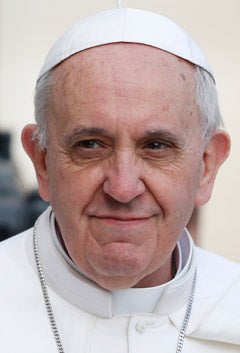
"I want a Church which is poor and for the poor."               Pope Francis is seen as he arrives to lead his general audience in St. Peter's Square at the Vatican April 3. (CNS photo/Paul Haring)

- Pope Francis, The Joy of the Gospel (Evangelii Gaudium)

Labels: , , , , ,

Wednesday, November 19, 2014

A word from our sponsor . . .

"[Solidarity] is to think and to act in terms of community, of the priority of the life of all over the appropriation of goods by a few. It is also to fight against the structural causes of poverty, inequality, lack of work, land and housing, the denial of social and labor rights. It is to confront the destructive effects of the empire of money: forced displacements, painful emigrations, the traffic of persons, drugs, war, violence and all those realities that many of you suffer and that we are all called to transform."

Pope Francis, Address to Participants in the World Meeting of Popular Movements, 10/28/14

Labels: , , , , , ,

Monday, September 01, 2014

Bishops' Labor Day Statement

Archbishop Thomas G. Wenski, Chairman of the Committee on Domestic Justice and Human Development at the United States Conference of Catholic Bishops, issued their annual Labor Day statement which said, in part:
This year Pope Francis canonized Saint John XXIII and Saint John Paul II. Both made immense contributions to the social teaching of the Church on the dignity of labor and its importance to human flourishing. St. John Paul II called work "probably the essential key to the whole social question" (Laborem Exercens, No. 3) and St. John XXIII stressed workers are "entitled to a wage that is determined in accordance with the precepts of justice" (Pacem in Terris, No. 20).

Pope Francis added to this tradition that work "is fundamental to the dignity of a person.... [It] 'anoints' us with dignity, fills us with dignity, makes us similar to God... gives one the ability to maintain oneself, one's family, [and] to contribute to the growth of one's own nation." Work helps us realize our humanity and is necessary for human flourishing. Work is not a punishment for sin but rather a means by which we make a gift of ourselves to each other and our communities. We simply cannot advance the common good without decent work and a strong commitment to solidarity.

Labor Day gives us the chance to see how work in America matches up to the lofty ideals of our Catholic tradition. This year, some Americans who have found stability and security are breathing a sigh of relief. Sporadic economic growth, a falling unemployment rate, and more consistent job creation suggest that the country may finally be healing economically after years of suffering and pain. For those men and women, and their children, this is good news.

Digging a little deeper, however, reveals enduring hardship for millions of workers and their families. The poverty rate remains high, as 46 million Americans struggle to make ends meet. The economy continues to fail in producing enough decent jobs for everyone who is able to work, despite the increasing numbers of retiring baby boomers. There are twice as many unemployed job seekers as there are available jobs, and that does not include the seven million part-time workers who want to work full-time. Millions more, especially the long-term unemployed, are discouraged and dejected.

More concerning is that our young adults have borne the brunt of this crisis of unemployment and underemployment. The unemployment rate for young adults in America, at over 13 percent, is more than double the national average (6.2 percent). For those fortunate enough to have jobs, many pay poorly. Greater numbers of debt-strapped college graduates move back in with their parents, while high school graduates and others may have less debt but very few decent job opportunities. Pope Francis has reserved some of his strongest language for speaking about young adult unemployment, calling it "evil," an "atrocity," and emblematic of the "throwaway culture."
. . .
At their best, labor unions and institutions like them embody solidarity and subsidiarity while advancing the common good. They help workers "not only have more, but above all be more... [and] realize their humanity more fully in every respect" (Laborem Exercens, No. 20). Yes, unions and worker associations are imperfect, as are all human institutions. But the right of workers to freely associate is supported by Church teaching in order to protect workers and move them--especially younger ones, through mentoring and apprenticeships--into decent jobs with just wages.
. . .
Supporting policies and institutions that create decent jobs, pay just wages, and support family formation and stability will also honor the dignity of workers. Raising the minimum wage, more and better workforce training programs, and smarter regulations that minimize negative unintended consequences would be good places to start.

In doing this we follow the lead of Pope Francis in rejecting an economy of exclusion and embracing an authentic culture of encounter. Our younger generations are counting on us to leave them a world better than the one we inherited.
The entire letter is available at http://www.usccb.org/issues-and-action/human-life-and-dignity/labor-employment/labor-day-statement-2014.cfm

Labels: , , , , , , ,

Friday, July 25, 2014

Meriam Ibrahim meets Pope Francis

Meriam Ibrahim was released yesterday and flew with her family to Italy, where she met with Pope Francis.

Last month we wrote about her ordeal in Sudan, where she was condemned to death for marrying a Catholic man.

According to a report from the BBC:
Mrs Ibrahim met Pope Francis at his Santa Marta residence at the Vatican soon after her arrival.

"The Pope thanked her for her witness to faith," Vatican spokesman Father Federico Lombardi was quoted as saying.
The meeting, which lasted around half an hour, was intended to show "closeness and solidarity for all those who suffer for their faith," he added.


Labels: ,

Monday, July 21, 2014

Bishops call for ceasefire

America’s bishops have reiterated Pope Francis’ call for a ceasefire and peace between Israel and Hamas.

In a letter to Secretary of State John Kerry, the chairman of the U.S. bishops’ Committee on International Justice and Peace, said that the United States should seek an immediate ceasefire between Israel and Hamas, provide humanitarian relief to the vulnerable people of Gaza, and return to the challenge of pursuing a just and lasting peace.

Bishop Richard E. Pates of Des Moines, Iowa, wrote, “Israelis should not have to live in fear of Hamas’ indiscriminate rocket attacks on civilian areas. At the same time, Palestinians should not have to live in fear for their lives from air and ground attacks or to suffer the humiliations of occupation.”

He noted that Catholic Relief Services has had to suspend it relief efforts in Gaza because of the fighting.


The full text of the letter is here

More information on the U.S. bishops’ advocacy on Israeli-Palestinian peace is available here..

Labels: , , , , , , ,

Friday, July 18, 2014

The sower, the seeds and immigration reform

Deacon Walter Ayres, director of the Commission on Peace and Justice, reflected on the Gospel and immigration reform in his homily for July 13, the 15th Sunday of Ordinary time:


            Today’s Gospel is so familiar to most of us, that the church doesn’t even require that we read it in its entirety. Instead, we have the option of reading a shortened version, as I did today.
            As Jesus explains in the full version of the Gospel, the seed that falls along the path is the person who hears the message without understanding it.
            The seed that fell on patches of rock is the person who first receives the message with joy, but falters when times get rough.
            The seed sown among the thorns is the person who hears the message, but who is choked off by worldly anxiety and the lure of money.
            Finally, the seed on good soil is the person who hears the word and takes it in, resulting in a miraculous yield.
            I assume that most Christians think of themselves as belonging to that last category, but many of them are wrong.
            We need to read the signs of the times to understand this better.

            Now, the phrase “the signs of the times” has been of particular importance to Catholics since Vatican II, because it signifies an understanding that the Church needs to attend more closely to the world if it is to remain faithful to its calling. It has been used by every Pope since Pope John XXIII.
            And when we read today’s Gospel in light of the signs of the times, we can see that it gives us a lens through which we can comprehend the issues of our time, such as the current immigration crisis.
            You see, this reading comes at a particularly opportune time.
            Just this week, the United States Conference of Catholic Bishops held a national migration conference in Washington.
            The goals were to share and apply Catholic Social Teaching on migration; and to deepen the capacity of diocesan and parish leaders to minister to, and advocate for, immigrants, refugees, and other people on the move.
            This occurred around the time people were blocking buses with immigrant children and families from places where they could be housed and fed.
            And the hatred spewing from the mouths of some protestors was a disgrace to us as a nation and a people.

            The influx of unaccompanied children is an important issue that we must face, but we must do it with the love and understanding that our faith requires of us.
            Now, the plight of immigrants is imbedded in our sacred scripture. From the plight of the Hebrew people in Egypt to the flight of Jesus and his family to escape from Herod, immigrants are presented to us as people for whom we must show particular concern.
            The children who cross our borders have crossed some of the worst land we can imagine, and under the worst conditions.
            They are the seeds that God has scattered on the ground. And we are called to help them grow.
            How do we know?
            The bible tells us so.

            In the book of Exodus we are told, “Do not oppress the stranger: you know how a stranger feels, for you lived as strangers in the land of Egypt.”
            Psalm 82 tells us, “No more mockery of justice . . . rescue the weak and the needy.”
            Isaiah tells us, “Woe to legislators of infamous laws . . . who refuse justice to the unfortunate.”
            Jeremiah proclaims, “Do not exploit the stranger . . .”
            The message is carried throughout Leviticus, Proverbs, and other books of the bible.
            So what are we to do?                                                           
            First, we must understand that these children are like the seeds mentioned in today’s Gospel. They have fallen on the worst ground, and they are being choked off by worldly anxiety and the lure of money. By lure of money, I mean the fear some people have that immigrants will take their jobs, a belief which has been proven false.
            Some people fear that immigrants are a burden on the healthcare system, which has been shown not to be true.
            Others argue that they are a drain on the economy, and that, too, is not correct.

            Our church, through Catholic Charities and Catholic Relief Services, is working to help these vulnerable people.
            And because the church sees the world as it is, and not how we would like it to be, we are working in Central America to provide education and employment opportunities to young people so that they will not feel that they have to leave their country in order to find a better life.
            These children have the potential – as do our own children – of producing the miraculous harvest that Jesus mentions in today’s Gospel, a harvest of a hundred-fold.
            One of them might discover the medicine that may someday save your life.
            Or they might start a company that employs your grandchild.
            They might return to their own country and become a politician who promotes the good that is needed at that time.
            But none of that can happen if we don’t take care of them now.

            When we think of today’s Gospel – about the sower and the seeds and the harvest – we must think not only about these children and the harvest they can provide as they mature. We must also ask ourselves what kind of harvest we are producing in our own lives.
            Does the word of God produce in us a willingness to help others in need, a desire to care for our neighbors as ourselves?
            Or has our love of neighbor been choked off by the weeds of selfishness and fear?
            Can we provide a bountiful harvest of love and compassion, or will we ignore the face of Jesus in these desperate children?

            The gospel of Matthew tells us that one day Jesus will come to us and we will ask Him, “when…. when did I see you?” When did I see you a stranger? When did I see you hungry? When did I see you needing clothes?
            Today, as you hear my words, a little girl is on her way across a desert land. A little boy is walking the same path. There is a good chance that both of them are Catholic.
            If they do not die alone on the way, they will arrive here as strangers. They will be hungry. They probably will need clothes.
            Like the tender shoots of today’s parable, their grip on life will be tenuous at best.
            We can help them by praying – praying for their safety and for a resolution to the current crisis.
            We also can send money to Catholic Charities or Catholic Relief Services.
            And we can contact our legislators and ask them to support sensible and fair immigration reform, and let them know that we do not object to housing some of these children in our own community as they await the next phase of their journey.
            But we must not stand idly by and do nothing.
           
            When the attendees at this week’s Migration Conference received their registration packet, they found a letter from the office of the Vatican Secretariat of State, who wrote to them on behalf of Pope Francis. This is part of what he had to say:
            “It is [the Pope’s] hope that, in the best traditions of the Church in the United States, the Catholic community will continue to welcome new immigrants, defend the unity of families, and provide opportunities for their full integration into society.”
            May the Pope not be disappointed in how we respond to this current immigration crisis.


Labels: , , ,